When survival is the goal, a shelter becomes your lifeline. Whether you’re battling freezing winters, torrential rains, or blistering summer heat, knowing how to build a shelter tailored to the environment can mean the difference between safety and danger. Let’s explore the most effective survival shelters for different seasons and terrains.
Winter: The Snow Cave
In snowy conditions, a snow cave is an excellent choice. It’s surprisingly warm due to the insulating properties of snow. To build one, find a deep snowdrift and dig a tunnel into it, creating a domed chamber inside. Ensure there’s an air vent for ventilation and layer the ground with pine branches or leaves to prevent heat loss from the cold ground.
Rainy Conditions: The Lean-To
When the rain is relentless, a lean-to shelter can keep you dry. Construct it using a sturdy ridgepole placed between two trees or supports, then layer branches, large leaves, or a tarp (if available) over the sloped frame. Position the shelter at a slight angle to let rainwater run off.
Hot Deserts: The Shade Shelter
In desert environments, heat is the primary enemy. A shade shelter helps protect you from direct sunlight while allowing air circulation. Use a tarp, a poncho, or natural materials like brush to create a canopy supported by sticks. Place the shelter in the shade of a rock or vegetation if possible, and avoid setting it up on exposed sand, which radiates heat.
Forests: The Debris Hut
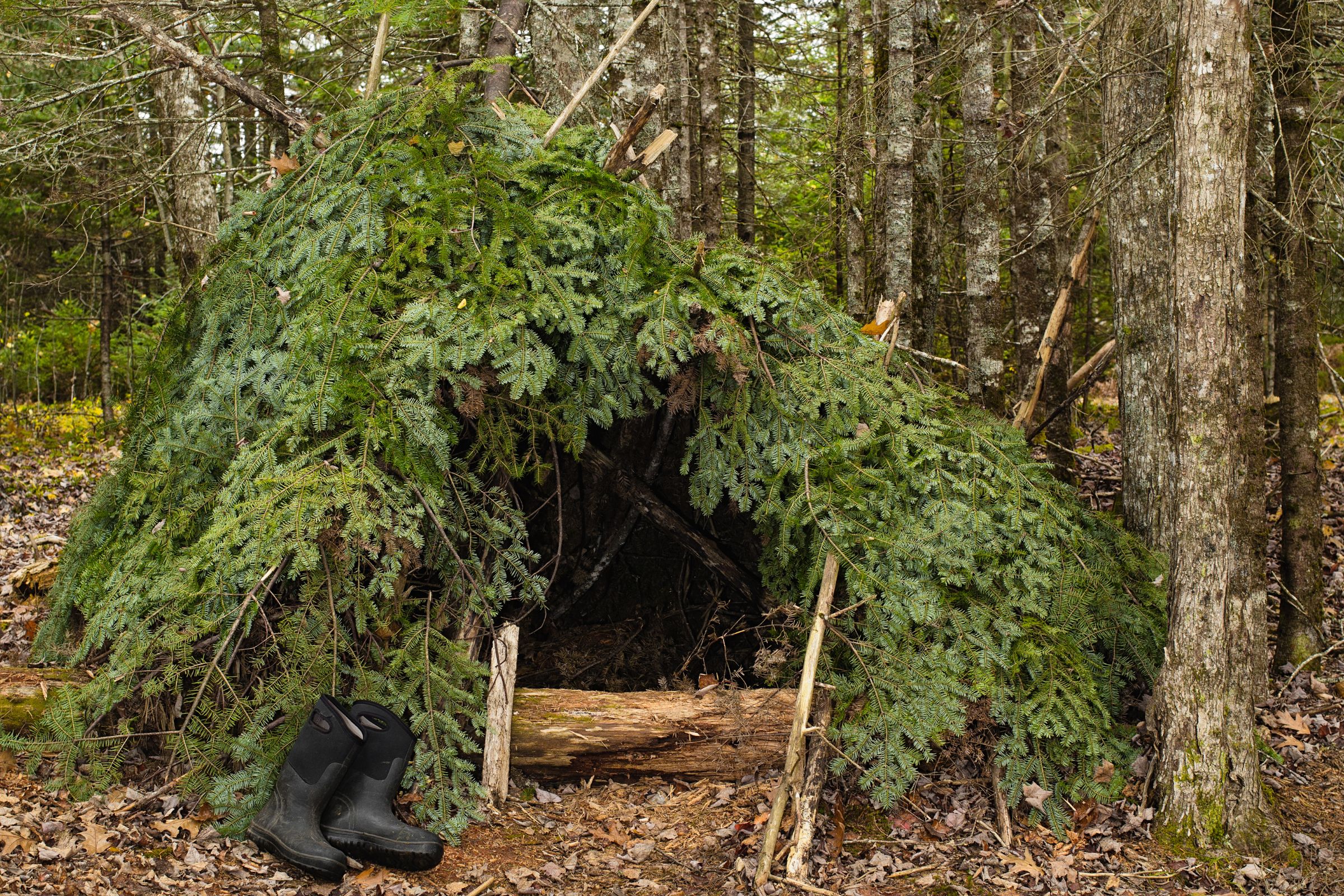
The debris hut is a versatile shelter ideal for wooded areas. Find a ridgepole to lean against a tree or prop on a Y-shaped branch. Cover it with sticks to form a frame, then pile leaves, moss, or any available debris for insulation. This hut provides warmth and protection from rain or wind.
Coastal Areas: Driftwood Shelter
If you’re near a beach, driftwood can be your best resource. Stack pieces of driftwood to create walls, and use large logs or tarp as a roof. Ensure the shelter is above the high tide line to avoid flooding during rising waters.
Key Tips for Building Survival Shelters
- Location Matters: Choose high ground to avoid flooding and areas protected from strong winds.
- Efficiency is Key: Conserve energy by using available materials and building only what’s necessary for the conditions.
- Insulate Wisely: Always prioritize insulation from the ground and exposure to elements.
Building the right shelter for your environment ensures comfort and survival, no matter where you are.